Orb Ball Devlog 4
This was a polish and refactoring week. Every lord got a simplification pass. I shipped a ton of balance changes. I rewrote the game’s movement system to be more predictable and satisfying. It’s been through many revisions. There are two main changes here. First of all, I refactored how we handle evasion so creatures almost always keep their speed maxed out no matter what. I would rather have an orb carrier charge into a defending line than wait around to get tackled. Then, there is no longer any A*-style pathfinding algorithm, which could produce unexpected roundabout paths. Now all obstacle avoidance runs through flow field pathfinding.
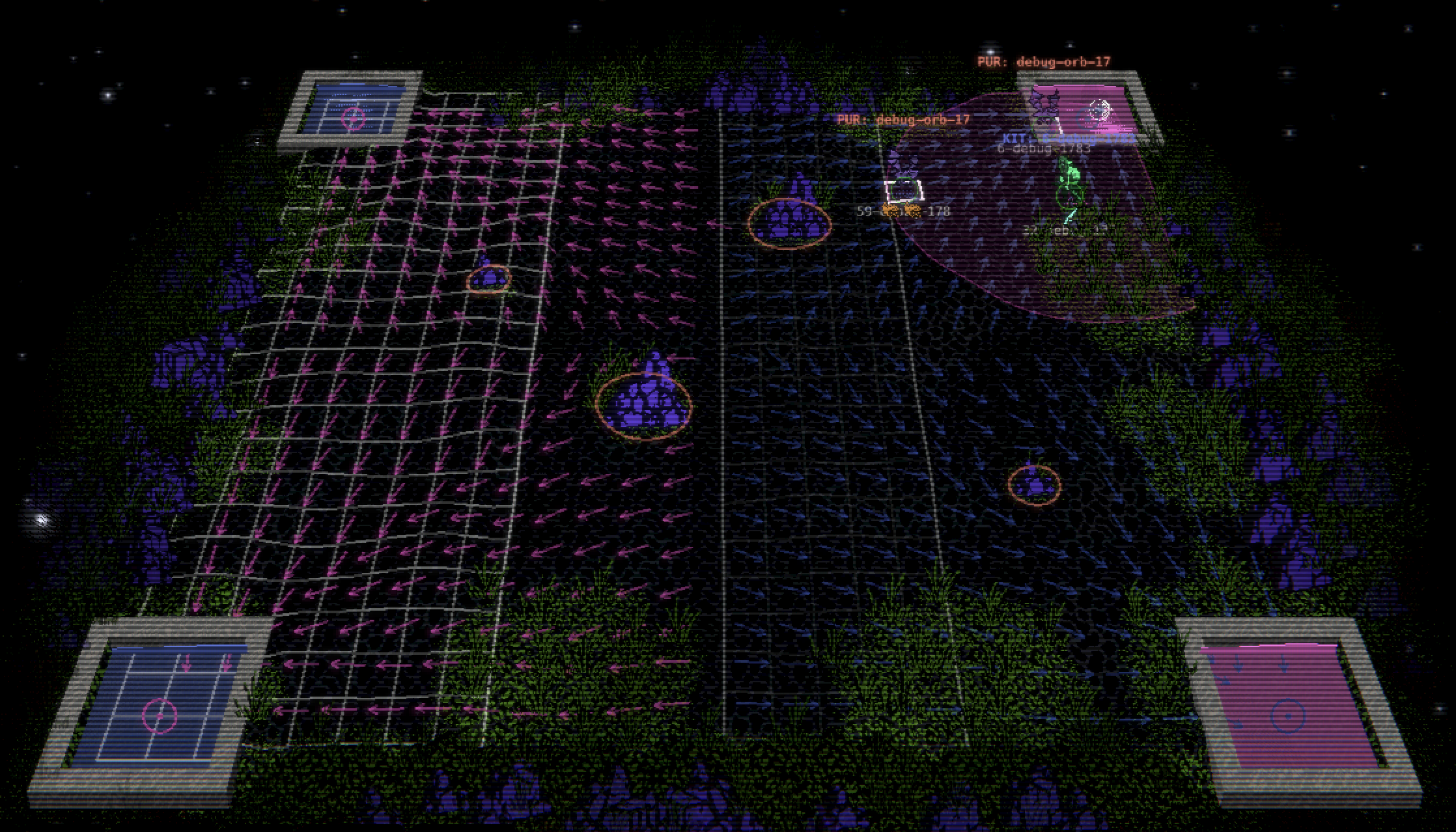 The new flow-field pathing system, visualized with a debug overlay: every cell directs creatures around obstacles and toward goals.
After a long conversation with Taos about how to get a wider group of early testers interested, I’ve started working on a casual tournament mode that supports any number of players in a single match. It’s intimidating to start playing a 1v1 game: I think players typically first play casually, then graduate to the competitive mode.
We explored a bunch of different ideas, like a version where you alternate between attacking someone else’s board and defending your own:
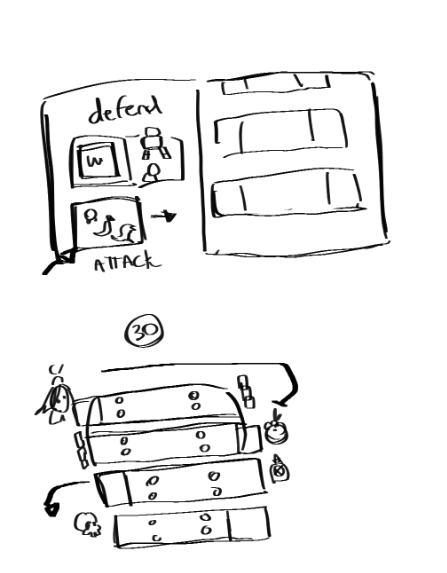 Early UI sketches for the new casual tournament mode.
But we landed on a design that is structured like a Swiss-style tournament: you alternate between opponents each round depending on your standing in the overall match.
In order to support this style of multiplayer, I had to rework spells. Previously, you could place spells anywhere on the field, even on your opponent’s side. But if you’re swapping from one opponent to another in the course of a single game, this would lead to matchups that are way too random. Instead, now each player has separate placement areas that they can carry with them from one matchup to the next:
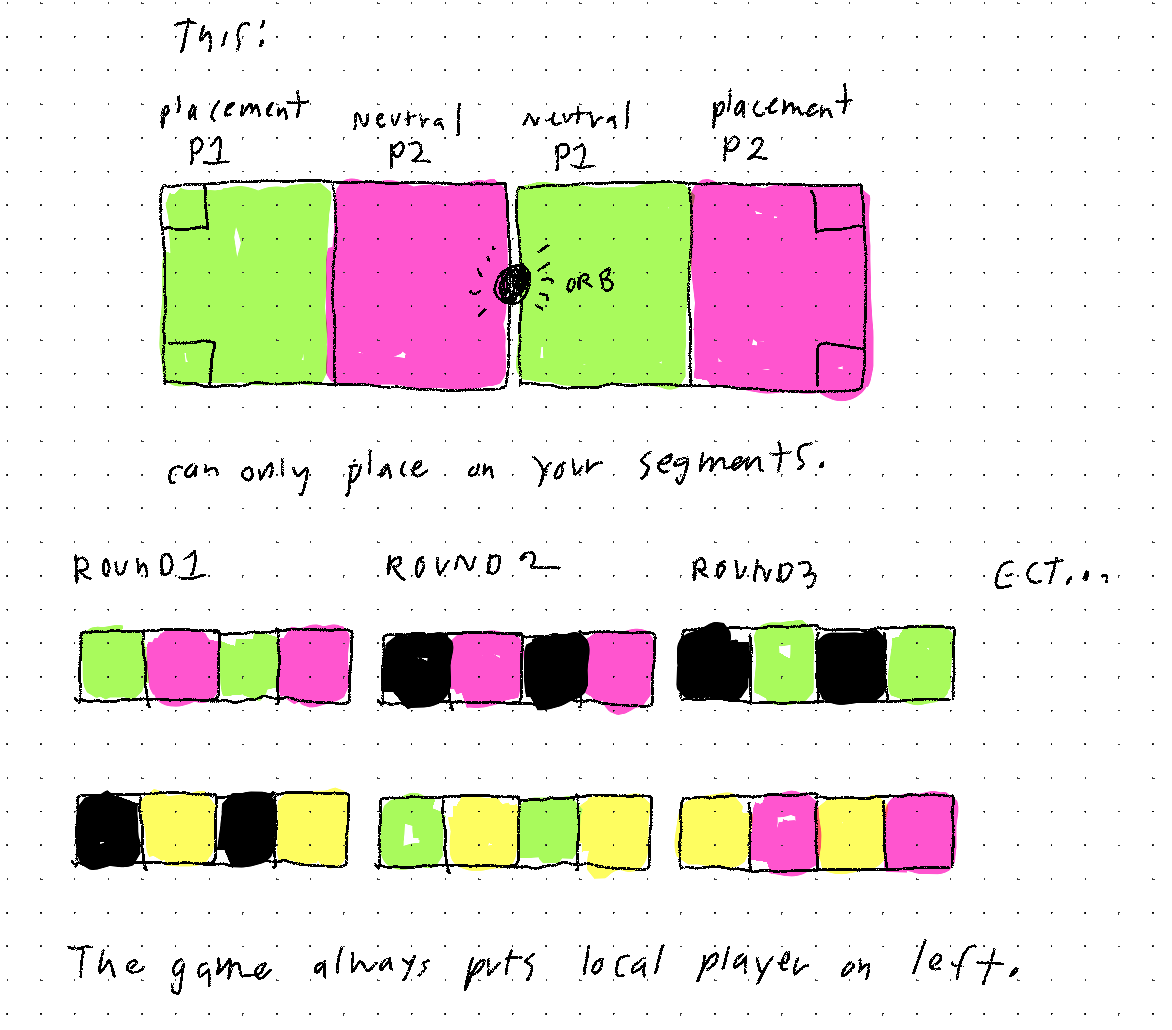 You can only place on your own segments, which transfer directly from one round to the next, even as your opponent’s swap out.
Taos and I have started porting more of the UI over to an illustrated style:
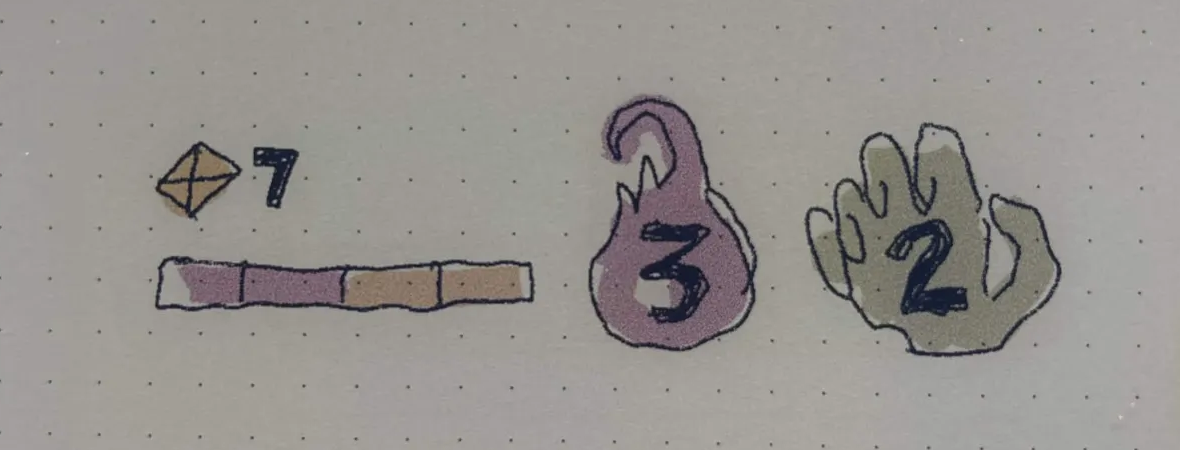 Doodling icons for the new unified action-resource system.
Lastly, I added some dev tooling that lets us iterate on the audio a bit more (still a loooong way to go with audio):
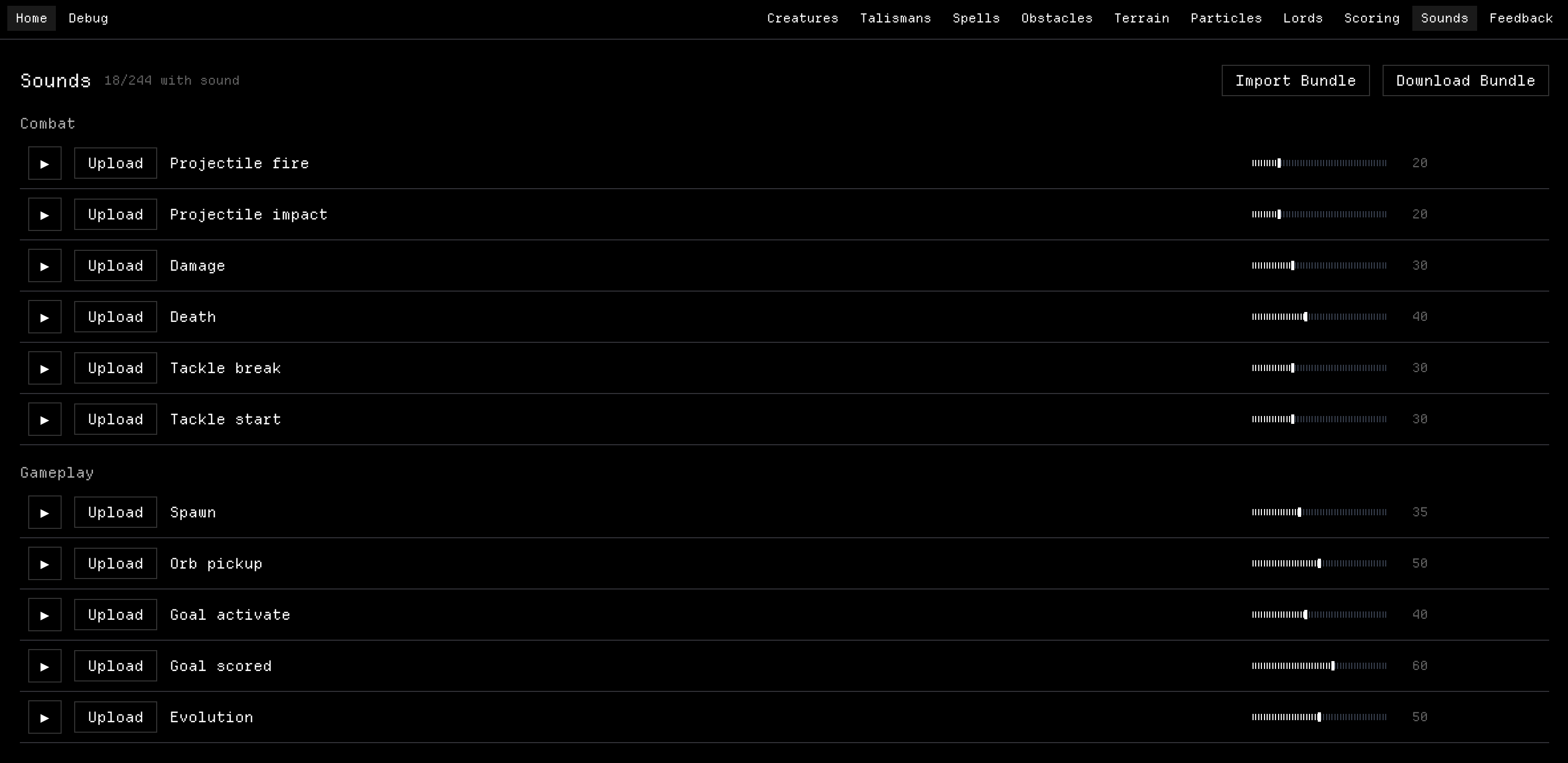 The in-game sound editor.
Changelog
Mechanics
- Movement rework: generally creatures move at steadier speeds and take more predictable paths.
- New ‘action’ resource system that combines all action limits into a single system. Repositions, beacons, evolution, and unsummon all cost actions, and players have a limited number of actions per turn.
- Evolving a creature now happens anytime from its info panel, instead of waiting on the shop to offer an evolution.
- The field has been reorganized: split into a creature area and then a neutral area in front of your opponent’s placement area. Spells and terrain can only go in your areas.
- Zone spells (Curse, Enchant, Blizzard, etc.) are contact-triggered rather than triggering instantly.
- The shop’s Terrain section is now merged into Spell section.
- Mage rework: Anomaly Research moved into the spell shop, offering one upgrade per round, for much lower cost than previously.
- Emissary rework: the Gambler’s Die is gone, replaced by a Slot Machine.
- Lich rework: Lich now has access to a variety of cursed talismans. One is offered each round.
- Geomancer rework: the two old powers merge into one decree, Geomancy, offering a free seed or rock spell each round.
- Scavenger rework: Automaton can now only equip one of each robot part talisman.
- Obelisks no longer occupy space on the field.
Balance
- Triggering a goal is now twice as fast.
- Spells and talismans are now available starting on round 1.
- Added a handful of new talismans across all tiers.
- Added a new Ember spell that deals 1 damage in a large radius, available from round 1.
- Removed all terrain spells except Tall Grass and Swamp.
- Meteor damage: 1 → 3.
- Golem: agility 3 → 2.
- Mystic: damage 1 → 2, and attack has stronger knockback.
- Faerie: attacks slower, can no longer carry the orb.
- Ranged attacks can be body-blocked by other creatures.
- Queen’s summons are 1 speed slower.
Usability
- A “Waiting…” indicator shows when your battle finishes before your opponent’s.
- You always play from the left side of the board, regardless of whether you are player 1 or player 2 (prepares for the upcoming tournament mode).
Notable bug fixes
- Fixed a bug that led to Faerie’s attack dealing 2x as much damage as it should.
- Creatures can be dragged across overlapping UI panels.
- Charmed creatures can no longer steal-and-score the orb, or freeze mid-tackle.
- Reviving creatures trigger on-faint effects every knockdown.
Interested in trying Orb Ball?
Join the discord – I’ll be organizing test matches.